

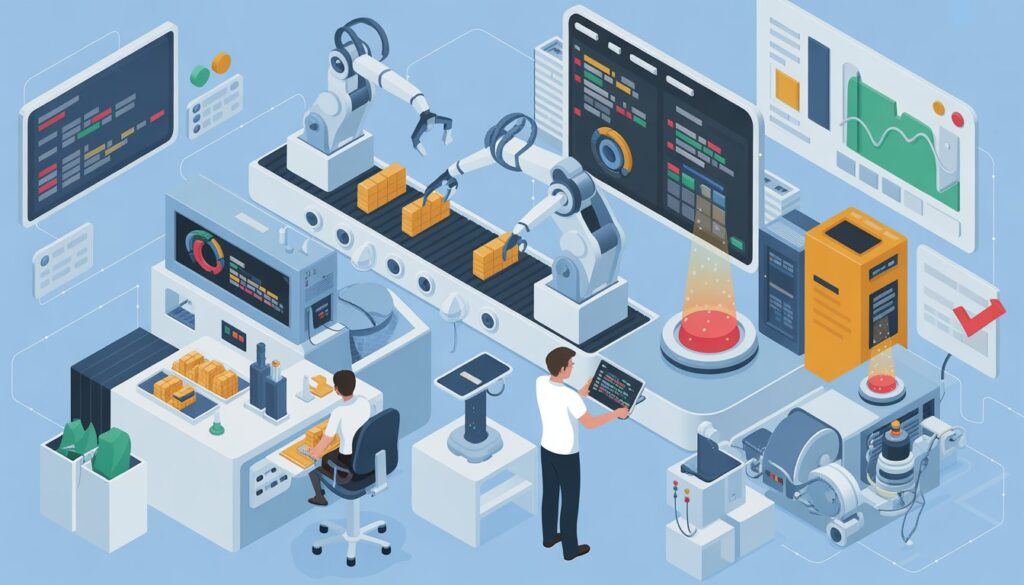
Automation is the application of technology that allows machines and software to perform tasks with minimal human input. It reduces manual effort by using programmed systems to carry out repetitive or complex processes efficiently and accurately. This shift helps us improve productivity, lower costs, and maintain consistent quality across various industries.
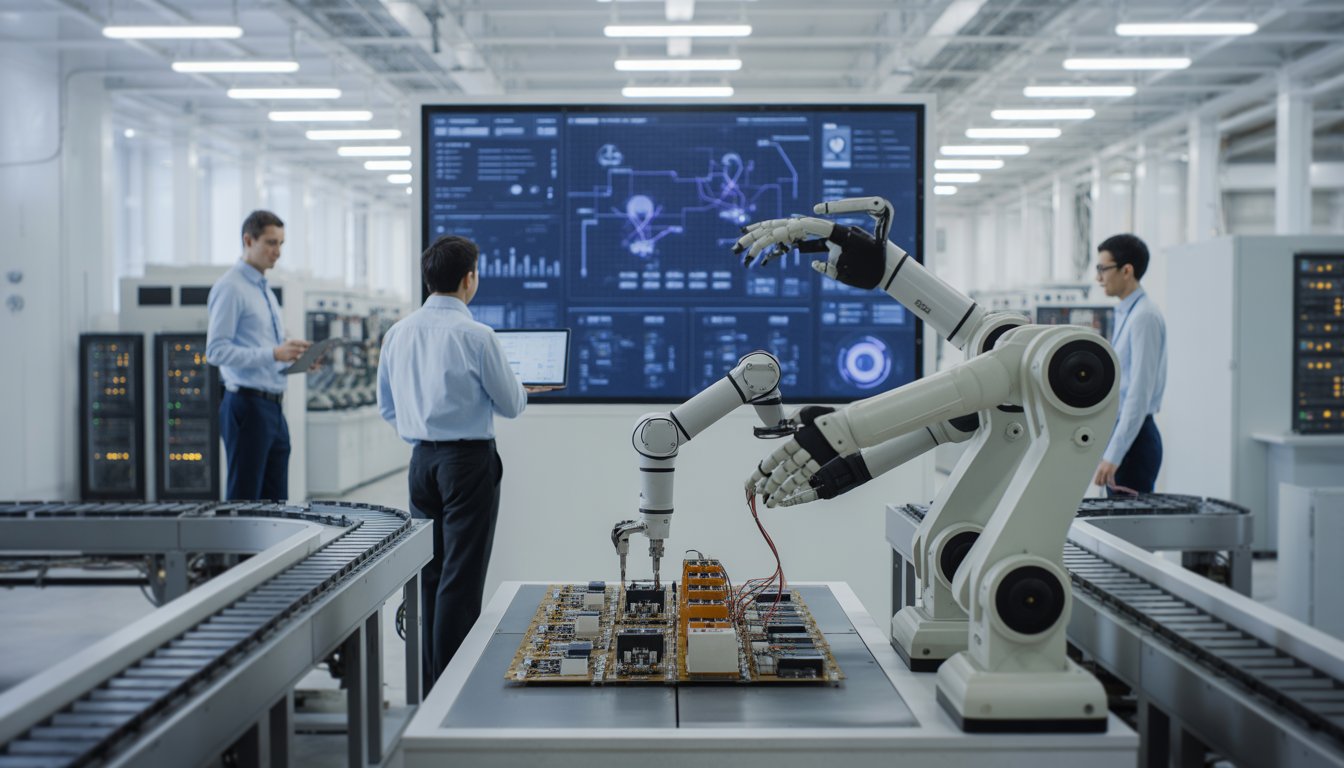
By automating routine tasks, we free up time to focus on more strategic work and decision-making. Automation can involve mechanical devices, software tools, or robotics, all designed to execute actions based on predetermined rules or algorithms. Understanding how automation works helps us see its potential to transform the way we operate and innovate.
As we explore automation in this article, we’ll break down its key types, benefits, and real-world uses. This knowledge will give us a clearer picture of why automation plays a vital role in today’s technology-driven environment. For more on automation fundamentals, see this explanation of automation technology.
What is automation?
Automation involves using technology to perform tasks that would otherwise require human effort. It changes how we control processes and manage work across different fields by reducing manual input and improving efficiency.
Definition and core concepts
Automation is the application of technology, software, or machinery to operate processes with minimal human intervention. At its core, it means creating systems that perform tasks automatically by following predefined rules or decision criteria. This reduces the need for human supervision or input.
Key concepts include:
- Minimal human input: Processes run with little to no manual action.
- Predefined criteria: Systems follow set rules to make decisions.
- Efficiency and consistency: Automation aims to streamline workflows and reduce errors.
More detailed perspectives on automation can be found in this IBM overview of automation.
Historical development
Automation has evolved alongside technological advances. Early examples include mechanical devices controlled by simple machines in the Industrial Revolution.
In the 20th century, automation expanded with the rise of electrical controls and programmable logic controllers (PLCs). The digital age introduced software-driven workflows and robotics, increasing automation’s reach.
Over time, automation shifted from manual machinery to complex systems involving sensors, artificial intelligence, and machine learning. This development enables adaptive decision-making and real-time controls, changing industries profoundly.
For a deeper history, see the detailed timeline in Wikipedia’s automation article.
Why automate?
We automate to improve productivity, reduce errors, and lower costs, especially in repetitive or dangerous tasks. Automation supports scalability by consistently producing outputs without exhaustion or fatigue.
Benefits include:
- Faster task completion.
- Improved accuracy and reduced human error.
- Enhanced safety in hazardous environments.
- Freeing human resources for higher-level work.
In business and industry, these advantages translate to competitive gains, operational resilience, and better resource allocation.
Insights into the motivations behind automation are found in this Spiceworks article about automation benefits.
Understanding automation in IT and business
In IT and business, automation means using software tools to manage workflows and data processing without needing manual input. Examples are automated reporting, system monitoring, and customer service bots.
Automation in these contexts often involves:
- Unattended processes: Actions executed without human oversight.
- Orchestration of tasks: Coordinating multiple automated steps.
- Workflow optimization: Streamlining business operations through programmed actions.
Businesses deploy automation to ensure consistency, reduce operational errors, and speed up repetitive tasks like data entry or server management.
Industry leaders detail these applications extensively in this Salesforce definition and glossary.
Automation in technology and machines
Automation in machinery refers to machines or robots performing tasks independently. Examples include assembly line robots, self-driving vehicles, and automated manufacturing equipment.
Technological automation involves:
- Sensors and actuators: Machines detect conditions and respond.
- Control systems: Software or hardware systems monitor and regulate actions.
- Robotics integration: Mechanical devices coupled with AI for complex tasks.
This area focuses on reducing human labor in production, enhancing precision, safety, and throughput.
A comprehensive discussion about technology-driven automation is available in this Red Hat article on understanding automation.
Types of automation
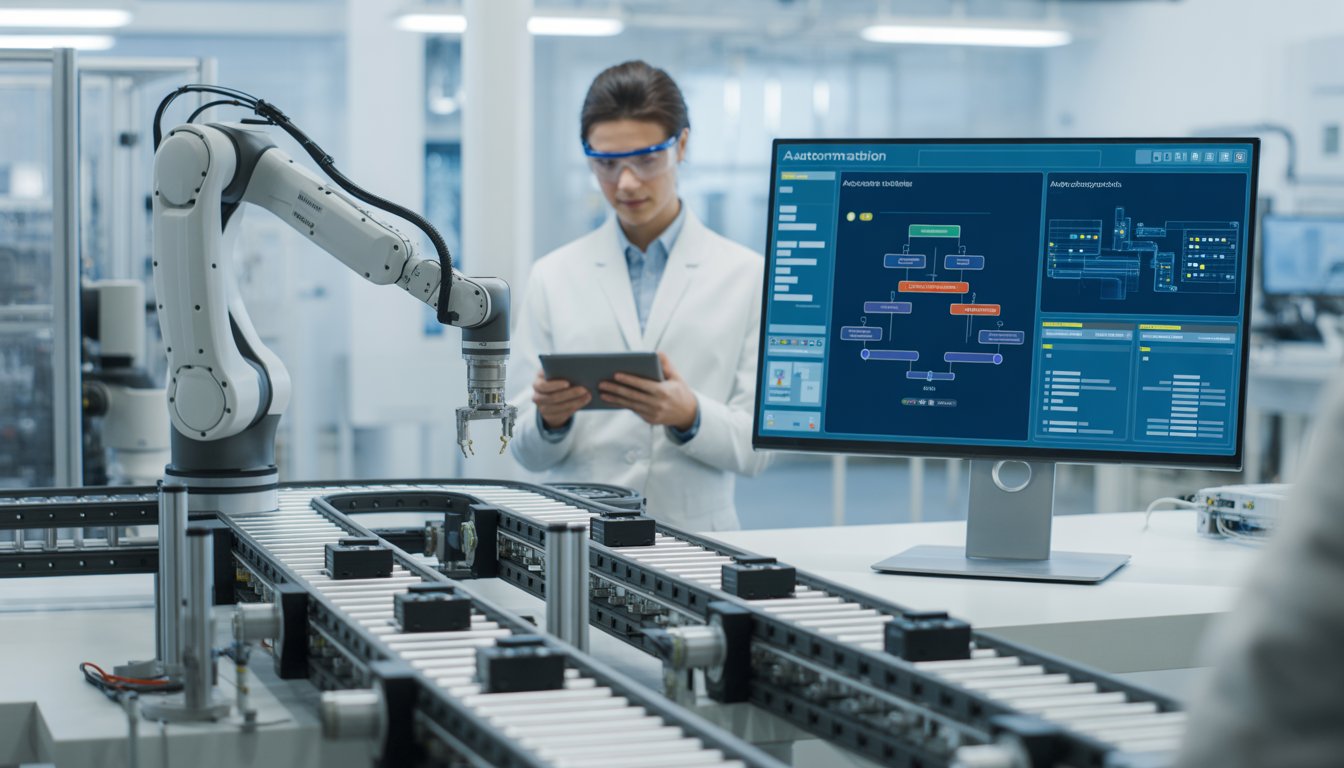
Automation varies widely depending on its application, from boosting efficiency in factories to simplifying daily tasks at home. Each type targets specific challenges using different technologies and methods.
Robotic process automation (RPA)
Robotic process automation uses software “robots” to handle repetitive, rule-based tasks. These robots mimic human actions within digital systems, such as data entry, invoice processing, and customer support workflows.
RPA reduces errors and speeds up processes without needing complex coding changes. It works well in industries like banking and insurance, where high volumes of routine tasks exist.
The key benefit of RPA is its ability to integrate with existing software, requiring minimal infrastructure changes. This makes it accessible for many organizations aiming to improve operational efficiency without large investments.
Industrial automation
Industrial automation uses control systems such as robots, sensors, and computer software to operate machinery and processes in manufacturing. It ranges from simple fixed automation to fully integrated and flexible production lines.
This type of automation enhances precision, speed, and safety while reducing labor costs and variability. It is common in automotive, electronics, and chemical manufacturing.
Industrial automation involves hardware like PLCs (Programmable Logic Controllers) and SCADA (Supervisory Control and Data Acquisition) systems for monitoring and controlling equipment. This foundation enables real-time adjustments and optimization of processes.
Cognitive automation
Cognitive automation combines artificial intelligence with automation to handle complex tasks that require judgment and decision-making. It includes technologies like natural language processing, machine learning, and computer vision.
Unlike traditional automation, cognitive automation can analyze unstructured data, recognize patterns, and improve over time. It applies to fraud detection, customer sentiment analysis, and predictive maintenance.
This type helps businesses automate decision-heavy processes that were previously manual. It supports human workers by providing insights and recommendations, not just routine task automation.
Business process automation
Business process automation (BPA) streamlines end-to-end processes across departments. It involves the design and implementation of workflows that reduce manual intervention and increase collaboration.
Typical uses include order management, HR onboarding, and compliance reporting. BPA integrates various tools like workflow software, databases, and communication platforms to automate complex processes.
BPA improves efficiency by eliminating bottlenecks and standardizing operations. It helps organizations maintain consistency and speed while adapting to regulatory requirements or changing business needs.
IT automation
IT automation focuses on streamlining the operation of IT infrastructure and services. It covers tasks such as server provisioning, software deployment, network configuration, and monitoring.
Automation tools can detect issues, apply patches, and scale resources automatically, reducing downtime and manual effort for IT teams.
IT automation supports continuous integration and deployment in software development, enabling faster releases and higher reliability. It is essential for managing modern cloud-based environments where complexity is high.
Home automation
Home automation uses smart devices and systems to control lighting, climate, security, and appliances automatically. It relies on sensors, connected devices, and mobile apps for remote or scheduled management.
Common applications include smart thermostats, automated lighting, security cameras, and voice assistants.
This type of automation improves convenience, energy efficiency, and safety in daily life. Users can customize settings and automate routines based on preferences, presence, or external conditions.
Intelligent automation
Intelligent automation combines RPA with AI technologies to create advanced automated solutions capable of learning and adapting. It integrates cognitive capabilities into routine tasks for more dynamic and flexible processes.
This approach is used in areas like customer service, finance, and supply chain management where variability and decision-making complexity are higher.
Intelligent automation enhances process speed and accuracy while enabling innovation. It bridges the gap between simple task automation and complete digital transformation by supporting continuous improvement.
For more detailed comparisons and real-world applications, visit the comprehensive overview of different types of automation systems.
Automation tools and technologies
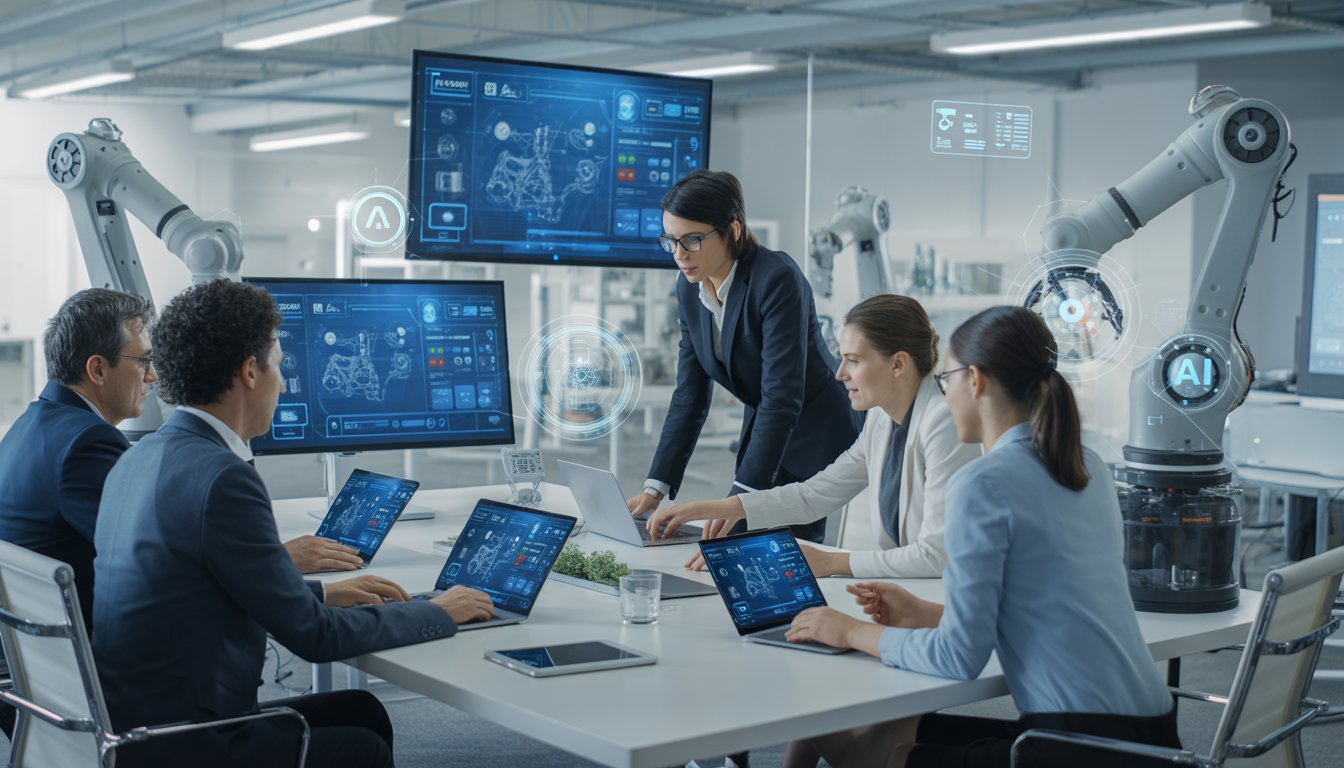
Automation relies on a wide range of specialized systems to optimize tasks, improve efficiency, and reduce manual effort. Understanding these tools helps us select the right solutions that fit various organizational needs and technical environments.
Automation software and platforms
Automation software manages repetitive tasks by automating workflows and processes across departments. Platforms like Applicant Tracking Systems (ATS) streamline recruitment by automating job postings, candidate screening, and interview scheduling. Project management tools such as Asana automate task assignments and progress tracking, increasing productivity.
These platforms often include features like scheduling, alerts, and reporting dashboards for real-time insights. They reduce human error and free up employee time to focus on higher-value activities. When choosing software, we consider integration capabilities, scalability, and user-friendliness to ensure smooth adoption and maximum impact. More about automation software and platforms can be found at this automation technologies guide.
AI and machine learning in automation
Artificial intelligence (AI) and machine learning (ML) enhance automation by enabling systems to learn from data and improve performance over time. AI-driven automation can handle complex decision-making tasks, such as fraud detection or predictive maintenance, that traditional rule-based systems cannot.
Machine learning models analyze patterns to optimize workflows or personalize user experiences without direct human input. Incorporating AI also supports more adaptive and flexible automation, allowing businesses to respond dynamically to changing conditions. AI-powered IT automation tools are increasingly vital for managing large-scale, complex environments efficiently. IBM provides insights into the role of AI in automation here.
Control systems and feedback mechanisms
Control systems form the backbone of many automation processes, especially in manufacturing and industrial settings. These systems monitor variables like temperature, pressure, or speed, and adjust equipment operation through feedback loops to maintain desired conditions.
Feedback mechanisms continuously measure output and make real-time corrections to keep processes stable and efficient. This reduces waste, improves quality, and enhances safety. Programmable Logic Controllers (PLCs) and Distributed Control Systems (DCS) are common technologies in this area, ensuring precise and reliable control. Understanding these systems is critical for optimizing automated operations.
Integration and hyperautomation solutions
Integration tools connect diverse applications, data sources, and processes into cohesive automated workflows. Hyperautomation combines multiple technologies—like AI, robotic process automation (RPA), and integration platforms—to automate end-to-end business processes comprehensively.
This approach helps eliminate data silos and manual handoffs, improving transparency and speed. We evaluate hyperautomation solutions based on their ability to streamline complex workflows, support scalability, and embed intelligence for continuous improvement. Comprehensive reviews on hyperautomation and integration tools are available at this automation landscape overview.
Low-code and no-code tools
Low-code and no-code platforms empower users to build automation workflows without extensive programming knowledge. These tools use visual interfaces and drag-and-drop components to create applications and automate tasks rapidly.
They enable business users, analysts, and developers to collaborate and deploy automation solutions faster, reducing dependency on IT teams. These platforms often support integrations with popular services, making them versatile for various functions like marketing automation or customer service. User-friendly design and scalability are key factors when selecting low-code/no-code tools, as detailed in this automation software guide.
Applications and use cases
Automation impacts diverse fields by improving accuracy, reducing manual effort, and optimizing resource use. It streamlines processes, enhances monitoring and decision-making, and supports better customer experiences.
Manufacturing and industrial use
In manufacturing, automation focuses on assembly lines, quality control, and equipment maintenance. Robots handle repetitive tasks like welding, painting, and packaging with consistent precision.
We use sensors and AI-driven monitoring systems to predict machine failures before they occur, reducing downtime. Automated workflows also optimize supply chain logistics and inventory management.
Automation enables faster production cycles with fewer errors and lower labor costs. It supports customization by adjusting robotic processes based on real-time data.
Healthcare and medical applications
Automation in healthcare enhances diagnostics, patient monitoring, and administrative tasks. AI algorithms assist in analyzing medical images, improving accuracy in identifying conditions.
We incorporate robotic surgery tools for greater precision and less invasive procedures. Automated systems handle patient records, appointment scheduling, and billing to reduce human error.
Remote patient monitoring devices track vital signs continuously, enabling early interventions. Automation also streamlines drug management and supply chain processes in hospitals.
Retail and ecommerce
Retail leverages automation for inventory tracking, sales forecasting, and customer service. We deploy AI chatbots that respond instantly to customer inquiries 24/7.
Automated warehouses use robots to pick, pack, and ship orders quickly and reliably, improving delivery times. Dynamic pricing tools adjust prices in real-time based on demand and competition.
Personalized marketing combines customer data with AI to tailor product recommendations effectively. Automation also simplifies payment processing and fraud detection.
Finance and banking automation
In finance, automation accelerates transaction processing, risk analysis, and compliance monitoring. AI-powered systems detect fraudulent activity faster than manual checks.
We automate routine tasks like account reconciliation, loan approvals, and customer onboarding to increase accuracy and reduce operational costs. Chatbots handle basic customer support inquiries.
Robo-advisors provide algorithm-driven investment advice customized to individual risk profiles. Regulatory technology tools help banks stay compliant with changing requirements efficiently.
Transportation and logistics
Automation optimizes route planning, fleet management, and cargo handling. We use GPS and AI algorithms to minimize fuel consumption and delivery times.
Autonomous vehicles are tested for freight and passenger transport, aiming to increase safety by reducing human error. Warehouse robots streamline loading and unloading processes.
Real-time tracking systems provide transparency and improve coordination between different supply chain partners. Automated documentation ensures faster customs and border clearance.
Agriculture and farming
Automation supports precision farming, crop monitoring, and resource management. Drones collect aerial data to assess plant health and soil conditions.
Deploying automated irrigation systems reduces water usage while maintaining optimal moisture levels. Autonomous tractors and harvesters perform labor-intensive tasks efficiently.
We apply AI to predict pest outbreaks and optimize fertilizer application. Data-driven insights improve yield predictions and support sustainable farming practices.
Smart homes and IoT devices
Automation in smart homes controls lighting, climate, and security systems for convenience and energy savings. Voice assistants interact with users to manage daily tasks seamlessly.
IoT sensors monitor appliances and detect maintenance needs proactively. Smart locks and cameras enhance security through remote access and alerts.
Energy management systems optimize electricity and heating use based on occupancy patterns. Integration between devices creates a connected ecosystem that improves user comfort and safety.
Benefits and impacts of automation
Automation transforms how we operate by increasing output and accuracy while reducing manual effort and costs. It reshapes workplaces and economies, driving growth through innovation and data-driven insights. Sustainability also improves through optimized resource use.
Efficiency and productivity gains
Automation accelerates task completion by minimizing human intervention and standardizing processes. We can achieve higher production rates with less variability and downtime. Automated workflows often run around the clock, delivering consistent output without fatigue.
Reducing manual errors and repetitive work frees teams to focus on more valuable activities. Automation also streamlines operations, allowing faster response to demand fluctuations. These productivity improvements directly enhance our competitiveness in fast-paced markets.
Cost reduction and scalability
By cutting reliance on manual labor, automation lowers operational costs significantly. We reduce expenses related to wages, errors, and resource overuse. Automation often leads to fewer defects, lowering costs tied to rework and waste.
Scalability becomes easier as automated systems can handle increased workloads without proportional cost rises. Businesses can expand faster, maintaining efficiency even when demand grows. This economic leverage supports sustainable business models and enables reinvestment.
Improved safety and accuracy
Automation removes humans from hazardous or repetitive environments, reducing workplace accidents. Machines follow exact protocols strictly, eliminating many human errors. This leads to higher product quality and compliance with safety regulations.
We can implement sensors and real-time monitoring in automated systems to catch anomalies immediately. This ensures safer operations and consistent standards. Accurate execution also protects brand reputation and customer trust by minimizing defects.
Decision-making through data insights
Automation generates large volumes of data from process execution. We can analyze this data to discover trends, inefficiencies, and opportunities that humans might miss. Real-time analytics enable quicker, evidence-based decisions.
Using AI and machine learning with automation lets us predict outcomes and optimize processes continuously. Data-driven insights empower strategic planning, cost control, and customer experience improvements across industries.
Innovation and competitive advantage
Adopting automation encourages innovation by freeing human capital for creativity and strategic initiatives. We can rapidly prototype, test, and deploy new products or services with automated tools. Automation also allows customization at scale.
Businesses leveraging automation gain a distinct edge in efficiency, responsiveness, and quality. This advantage helps capture market share and respond better to customer needs. Staying current with automation technology is essential to remain competitive.
Economic and workforce impacts
Automation changes job roles rather than simply eliminating them. While routine tasks become automated, new roles emerge in management, maintenance, and development of automation systems. Workforce skills must evolve accordingly.
We face transitional challenges as some jobs shift or disappear. However, automation can increase overall economic productivity, creating wealth and new employment opportunities indirectly. Preparing our workforce through education and training is crucial.
Sustainable practices
Automation optimizes resource consumption by adjusting input levels precisely to demand. We reduce waste and energy use by minimizing human error and improving process control. This leads to a smaller environmental footprint.
Automated systems enable better monitoring of sustainability metrics and adaptive control for energy efficiency. We can also implement circular economy principles more effectively through automation, improving reuse and recycling in production cycles.
Future and emerging trends
Automation continues to evolve rapidly, driven by advances in technology and growing business demands. The focus is on deeper integration with intelligent systems, more complex workflows, and broader applications across industries of all sizes.
Artificial intelligence and automation integration
We see artificial intelligence (AI) becoming fundamental in enhancing automation processes. AI improves decision-making through data analysis and predictive capabilities. This integration allows systems to handle complex tasks independently, reducing human intervention.
Machine learning models optimize workflows by learning from data patterns, enabling real-time adjustments. Natural language processing (NLP) enhances automated customer interactions, improving accuracy and user experience. Together, AI and automation create adaptive systems that respond dynamically to changing conditions.
The trend also includes AI-driven analytics, which helps identify inefficiencies and optimize processes continuously. This integration sets the groundwork for smarter, more autonomous operations across industries.
Hyperautomation
Hyperautomation refers to the orchestrated use of multiple technologies—RPA (Robotic Process Automation), AI, machine learning, and others—to automate as many business processes as possible.
It involves mapping workflows, identifying automation opportunities, and utilizing intelligent tools to execute complex tasks end-to-end. Hyperautomation increases efficiency by combining human knowledge with automation tools, often described as RPA 2.0.
This approach not only automates routine work but also emphasizes analytics, process mining, and optimization. It supports scalable, flexible systems that businesses can adapt quickly to market changes and operational needs.
Automation in cybersecurity
Automation in cybersecurity is expanding to handle increasing threat volumes and complexity. Automated systems can detect, analyze, and respond to cyber threats in real time, reducing response times and minimizing damage.
Tools include AI-powered threat detection, automated incident response, and continuous vulnerability management. Automated security processes also free up human experts to focus on sophisticated threats that require judgment.
As cyberattacks grow more frequent and sophisticated, automation’s role is critical in maintaining robust defenses, improving threat intelligence sharing, and enhancing system resilience with minimal manual oversight.
Marketing automation and personalization
Marketing automation uses software to streamline repetitive marketing tasks like email campaigns, social media posting, and lead nurturing. It allows marketers to deliver targeted content at optimal times without manual effort.
Personalization is a key focus, enabled by automation tools that analyze customer data to tailor messages and offers. This increases engagement and conversion rates by aligning marketing with individual customer preferences and behaviors.
Advanced platforms combine automation with AI to predict customer needs and segment audiences dynamically, driving better ROI. This trend makes marketing more efficient and responsive to real-time consumer insights.
Automation for small and large businesses
Automation is no longer limited to large enterprises; small businesses increasingly adopt automation to compete effectively. For small businesses, affordable and user-friendly automation tools simplify operations like invoicing, customer service, and inventory management.
Large businesses focus on integrating automation across complex systems and global operations, using hyperautomation and AI-powered analytics to optimize every level of their workflow.
Both segments benefit from scalable, cloud-based platforms that make deployment easier and faster. Automation helps small businesses increase efficiency without large IT investments, while enabling enterprises to innovate and remain agile in competitive markets.
More details on these trends can be found in analyses of the latest automation trends for 2025 and in-depth industrial automation trends.
Professional roles and community
Automation shapes many roles across industries, requiring specific skills and collaborative efforts. We need clear standards and continuous learning to maintain quality and keep pace with evolving technologies.
Role of automation professionals
Automation professionals design, develop, and maintain systems that replace or enhance manual tasks. Their responsibilities range from programming robots and managing workflows to analyzing data and optimizing processes.
We look for skill sets including software development, process engineering, and problem-solving. Soft skills like communication and adaptability are essential because professionals must work across technical and business teams.
As automation evolves, professionals must stay updated with tools like RPA, AI, and machine learning. They also help identify which processes benefit most from automation, ensuring alignment with organizational goals.
Automation community and standards
Building a strong automation community enables knowledge sharing and innovation. Communities foster collaboration between developers, users, and leaders, improving tools and best practices.
Standardization is critical. We rely on agreed-upon protocols, frameworks, and ethical guidelines to ensure interoperability and quality across platforms. This reduces duplication of effort and mitigates risks from inconsistent implementations.
Engaging with recognized leadership programs and community groups helps professionals influence the future of automation. Involvement can accelerate adoption and promote shared ownership of technology improvements.
Training and certification
Effective training equips us with up-to-date technical and strategic skills essential for automation careers. Certifications validate knowledge and increase credibility with employers and clients.
Training focuses on areas such as RPA tools, AI integration, cybersecurity, and process analysis. Structured programs often combine hands-on labs, project work, and theoretical knowledge.
We value certifications that are vendor-neutral and industry-recognized since they demonstrate broad competency. Ongoing education is critical, as automation technologies rapidly advance and change role requirements regularly.
For structured training and career advancement, we can explore opportunities through leading organizations and certification bodies. References such as Automation Anywhere’s programs provide valuable pathways.
About The Author